The Best Answer in the Room Is Rarely Coming From the Person in Charge
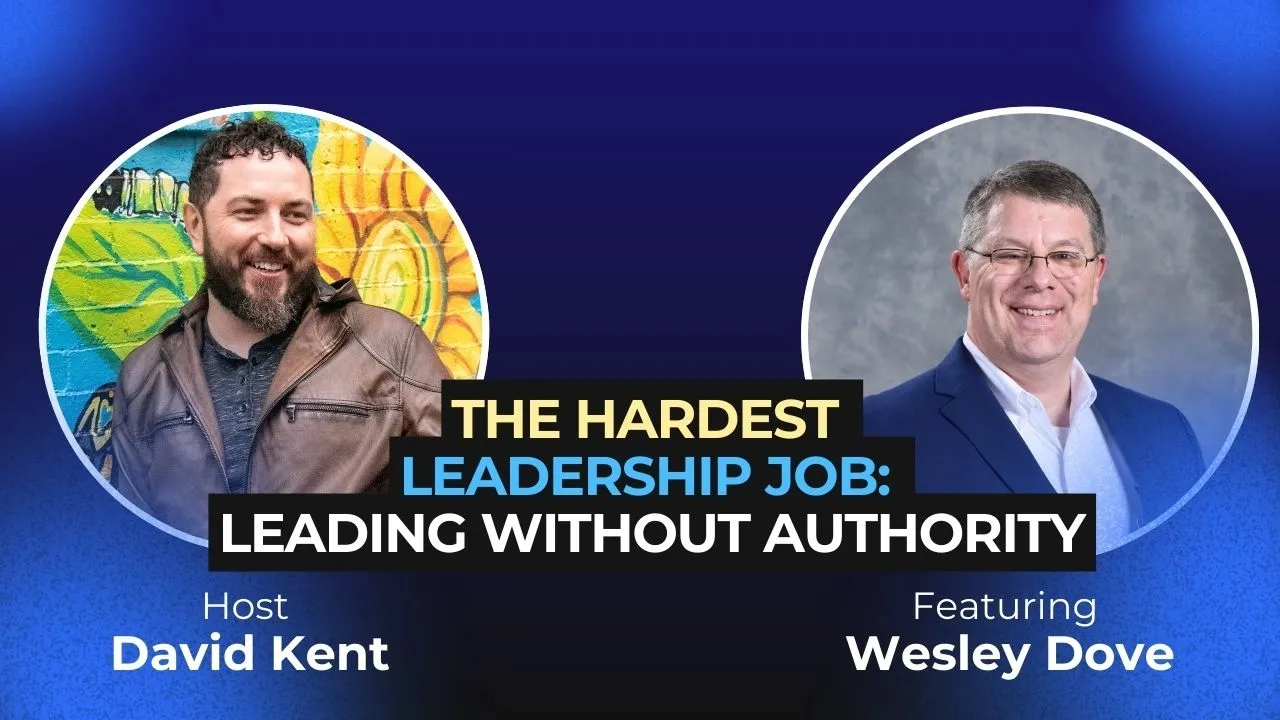
Wes Dove came back from his honeymoon and walked straight into the hardest leadership lesson of his career. First day on a new job, no title, no authority, and a mandate to roll out a lean manufacturing process to people who had worked that facility longer than he had been alive. His pay rode on results he could only get from people who had every reason to ignore him. He had about one week to figure out to get people agree to change what they have done for years without the authority just fall back on "because I said so."
That was the setup to the backstory Wes gave me when joined me on Lead Smarter. Two decades later he coaches leaders for a living. But, the lessons off that floor still run through the whole program. Here are the insights he discovered were crucial to being successful as a leader regardless of the org chart.
The person closest to the problem already has your answer
The person closest to the problem is almost always the one with the right answer. They live in the work every day. They know more about it than anyone above them ever will.
Wes picked that up years ago in a conversation with Carly Fiorina, the former CEO of Hewlett Packard. Most of us get promoted away from the work, then spend our energy telling the people still doing it how to do it better. Wes was quick to point out the futility in this flawed logic. Walk in and explain to someone how to do the job they do every day, and you are going to lose that exchange every time. The expertise is already in the room. It is rarely sitting in a different chair just because that person has a higher title.
What I appreciated is that Wes does not leave leaders standing there with nothing to do. He reframes the job. Agree on the shared end goal, then ask a single question and keep asking it: What do you need me to do that you can't do for yourself? Your role becomes clearing obstacles so the expert can be the expert. Set the destination together, then remove whatever is blocking the people who know how to reach it.
I told Wes on the recording that this is how I run my own teams. My goal is to hand over as much authority as I can, then remove myself and become a contributing voice rather than the final word. The only time I overrule is when there is context sitting outside what the team has direct experience or authority over.
That condition matters, and I want to be honest about it. This works when you have hired well and given people the time and room to grow into the decisions. Hand real authority to someone who is not ready for it and you have not empowered them. You have abandoned them, then called it trust. Get the hiring and the support right first, and stepping back becomes the most useful thing you can do.
Values on the wall are not values in the room
A room of senior supervisors and managers, average tenure north of twenty years, got asked a simple question. Can anyone tell me what your company's values are? Silence. You could have heard a pin drop. The values were printed on the wall of the very room they were sitting in.
Wes was running that session, and he was careful about how he told me the story. It would be easy to turn it into a cheap shot, and he refused to. These were good people at a long-standing company that has provided jobs and strengthened its local economy for decades. They were doing a great job. They simply had no working relationship with the words behind them. The values existed as decoration rather than as anything shaping a decision on a Tuesday afternoon.
The distance between what an organization declares and what it actually operates on is where most culture problems live. A value that never gets discussed never gets upheld. It just hangs there while everyone walks past it, and after a while nobody sees it at all. Most of us have worked somewhere with a poster like that.
Wes watched one leader do the opposite. A man who had stepped away from running a large multi-state company bought a small business for his family to operate, and on day one he named his handful of values and said every decision from that point forward would be measured against them. Every time Wes was on site, he watched this owner walk the values into each individual role. Here is what integrity looks like in your job. Here is what it looks like in yours. Now here is the next one, and here is who it affects. The values became instructions people could follow when a hard call came up and nobody was around to ask.
My own read on this used to be binary. I have only ever seen a company truly live its values when the leader at the top is genuinely passionate about them, and everywhere else the words are real while nobody carries enough weight to make the organization embrace them. Wes softened that edge in a useful way, and I'd guess that comes from having sat across the table from more of these organizations than I have. His view is that leaders have to walk the talk and keep the values in front of people constantly, and that even when you cannot control the layer above you, you can still influence it. Control what you can control. Set the example in your own corner and the impact can travel downward OR upward.
A quick self-audit
If either story hit a nerve, here are a few questions to sitting with before your next week starts.
Where are you explaining the job to someone who does that job every day and knows it better than you?
What obstacle could you remove this week that would let one of your people operate more like the expert they already are?
Have you asked your team the Wes Dove question lately: what do you need me to do that you can't do for yourself?
If you pulled ten people from across your organization into a room, how many could name your values without looking them up?
Could they tell you what those values mean in their specific role, on a normal day, when a hard call comes up?
Are your values shaping real decisions, or are they decorating a wall?
Where are you relying on authority to get compliance, when earning influence would get you commitment instead?
Where this connects to the work we do
Both of Wes's stories run on the same truth. Leadership shows up at the level of the work and the people, rather than in the title or the poster. The moment you push authority down to the people closest to the problem, you take on a new responsibility. Those people have to be the right people, genuinely capable, well supported, and clear on where the organization is headed. That is where a lot of leaders get stuck, especially while scaling, when they suddenly need to trust a distributed team they cannot see across a room.
That's exactly the kind of work we help clients with at Unbottleneck. We connect growing businesses with skilled remote talent, then help collaborate on the onboarding, structure, and support around those hires so the people closest to the work can genuinely own it. If your growth depends on handing real authority to a team and trusting them to run with it, let's have a conversation.
You can hear my full conversation with Wes Dove on Lead Smarter, and find more writing on the blog.
Lead Smarter. Not Harder.

Sponsors This Podcast